Education Series
Knowing the Problem
Before you can build wealth, you need to understand what's working against you. Three lessons that change how you see money forever.
Lesson 1
Your Dollar Buys Less Every Year
Video
Infographics
Lesson Text
What You'll Learn in This Lesson
Wealth isn't measured by how many dollars you have. It's measured by what those dollars can actually buy. That's called purchasing power — and yours is shrinking every single day.
The Shrinking Dollar
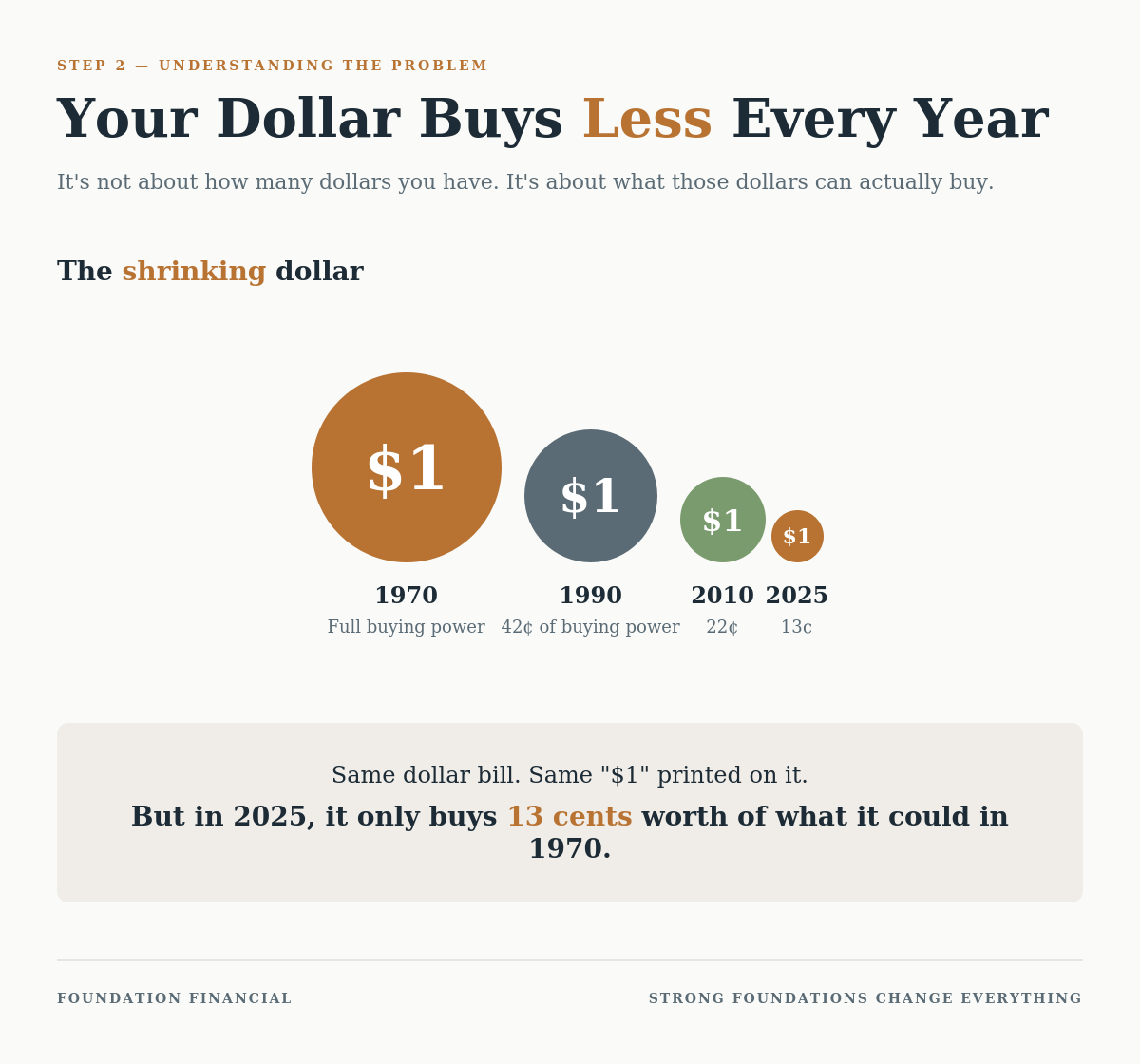
Look at the infographic above. That dollar coin gets smaller and smaller — not because the number printed on it changed, but because what it can buy changed.
In 1970, a dollar had full buying power. By 2025, that same dollar only buys about 13 cents worth of what it used to. It lost 87% of its value. Not because of anything you did — because that's how the system works.
$20 Doesn't Go Where It Used To
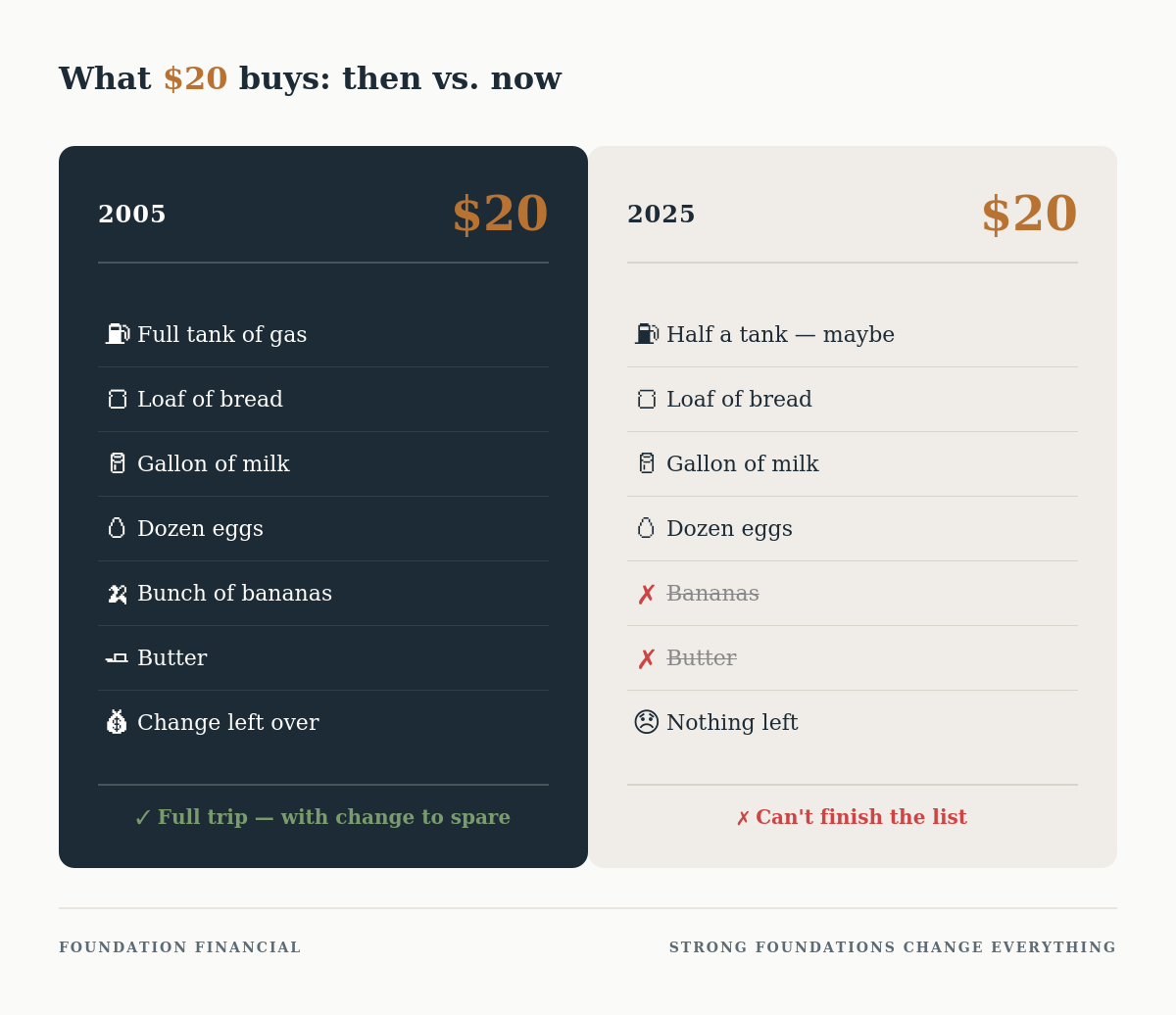
Twenty years ago, $20 could fill your gas tank, grab bread, milk, eggs, bananas, and butter — and still have change. Today that same $20 can't even finish the grocery list.
You're not imagining it. Things really do cost more. A lot more. And it's not because stores are greedy. It's because your dollars are weaker.
Same House, Different Price Tag
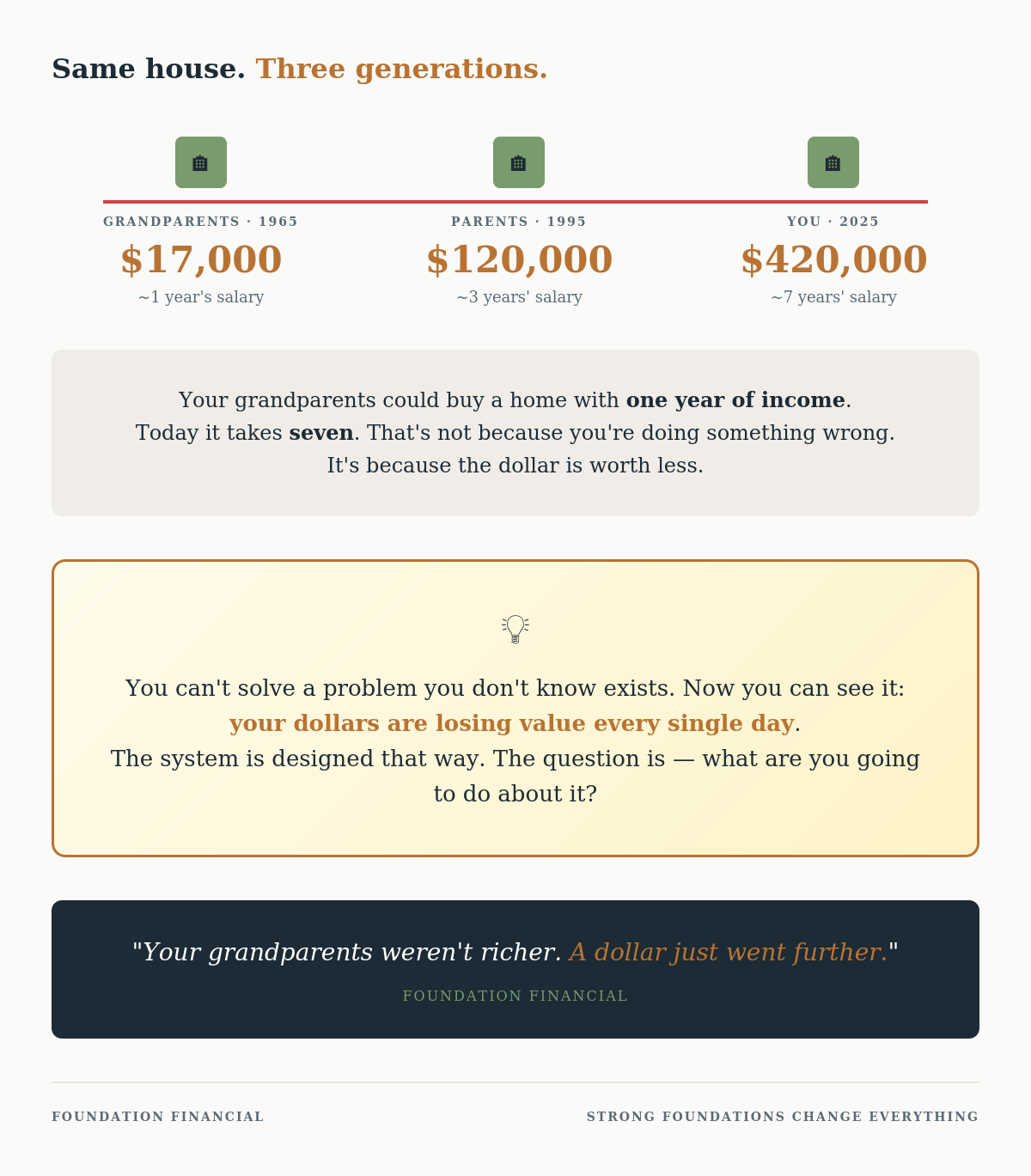
Your grandparents bought a home for about $17,000 — roughly one year of income. Your parents paid around $120,000 — about three years of income. Today that same house costs $420,000 or more — close to seven years of income.
They weren't smarter. They weren't luckier. A dollar just went further back then.
The Savings Account Trap
Say you have $10,000 in a savings account earning 4% interest. After a year, you've got $10,400. Sounds good.
But if inflation was 5% that year, the stuff you could have bought for $10,000 now costs $10,500. You earned $400, but prices went up $500.
Your bank account went up. Your wealth went down.
Multiply that across 10, 20, 30 years. This is why people save diligently, do everything they're told, and still end up struggling. Their money didn't keep up.
The Question Nobody's Asking
Most people focus on making more money. But if the money you're making buys less every year, are you actually getting ahead?
If your money isn't growing faster than prices are rising, you're falling behind — even when your bank account goes up.
You can't solve a problem you don't know exists. Now you see it. The next lesson shows you exactly how it works.
"In the house of the wise are stores of choice food and oil, but a foolish man devours all he has." — Proverbs 21:20
The wise don't just earn — they store and protect. That's what you're learning to do.
Key Takeaway
Your dollar lost 87% of its buying power since 1970. Saving money in a bank account that earns less than inflation means your wealth is shrinking every year — even when your balance goes up. The number doesn't matter. What it can buy is what matters.
Lesson 2
Inflation: The Silent Pickpocket
Video
Infographics
Lesson Text
What You'll Learn in This Lesson
Inflation means prices go up over time. That's it. Food, rent, gas, insurance — all of it costs more year after year.
But here's what most people miss: when prices go up, your money buys less. That's called losing purchasing power. And it's happening to you right now whether you realize it or not.
The Hidden Tax
Inflation isn't random. Governments and central banks create it on purpose by printing more money and keeping interest rates low. When there's more money in the system chasing the same amount of stuff, prices rise.
You never voted for it. You never see it on your bank statement. But you pay it every single day at the grocery store, at the gas pump, and when your rent goes up.
That's why people call inflation the cruelest hidden tax.
What $100,000 Actually Became
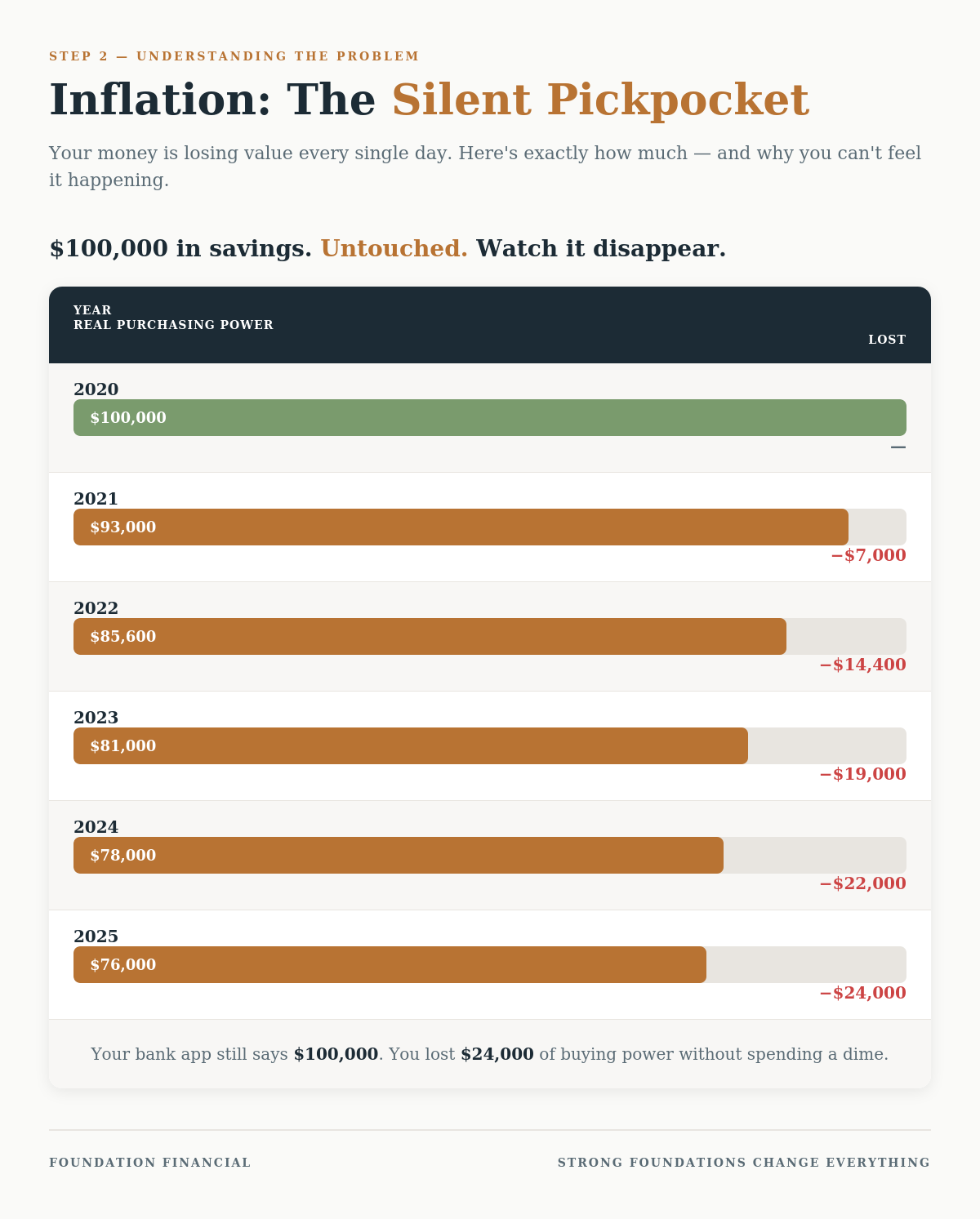
Imagine you had $100,000 in savings in 2020 and didn't touch it.
- 2020 — Your money could buy $100,000 worth of stuff
- 2021 — Inflation hit ~7%. Your buying power dropped to ~$93,000
- 2022 — Inflation hit ~8%. Down to ~$85,600
- 2023 — Inflation at ~4-5%. Down to ~$81,000
- 2024 — Inflation at ~3-4%. Down to ~$78,000
- 2025 — More of the same. Down to ~$76,000
Your bank app still says $100,000. But in real terms, you lost about $24,000 of buying power in five years — without spending a dime.
The Treadmill Trap
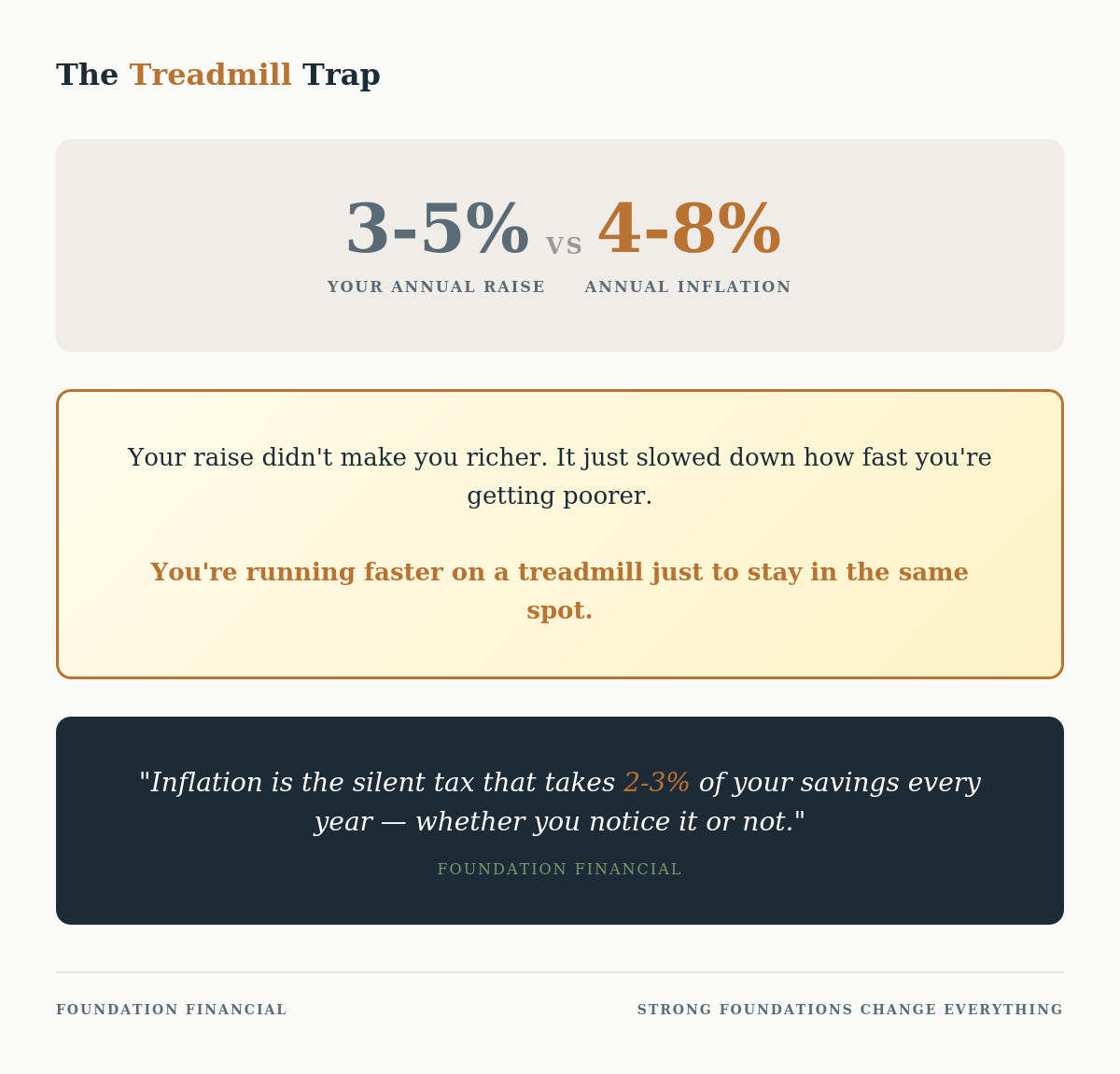
Your salary goes up 3-5% a year. You feel like you're getting ahead.
But if inflation is running at 4-8%, your raise didn't make you richer. It just slowed down how fast you're getting poorer. You're running faster on a treadmill just to stay in the same spot.
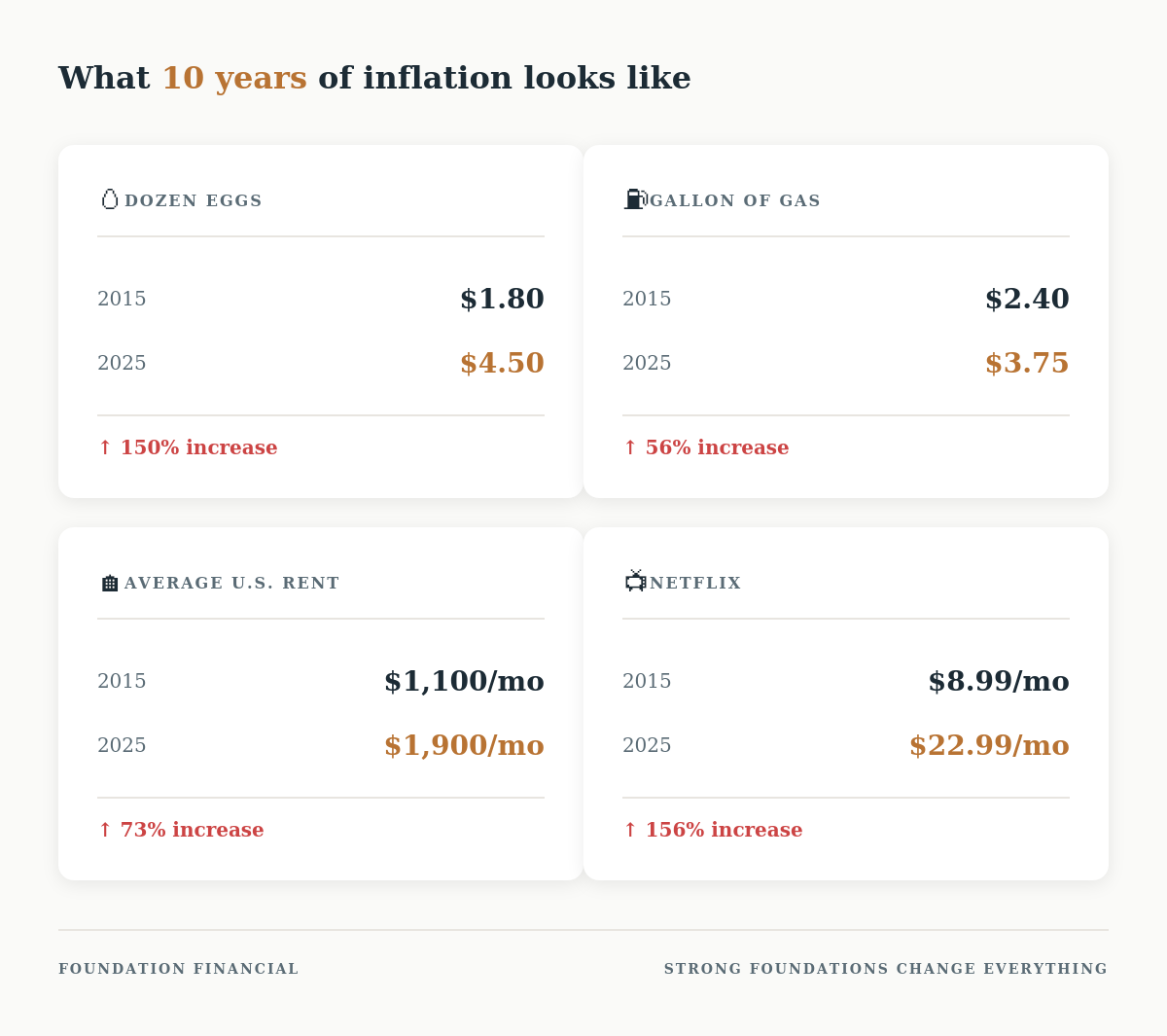
10 Years of Real Prices
- Dozen eggs: $1.80 in 2015 → $4-5 today
- Gallon of gas: $2.40 → $3.50-5.00
- Average U.S. rent: ~$1,100/month → ~$1,900/month
- Netflix: $8.99/month → $15.49-22.99/month
Your parents bought a house and filled a grocery cart for a fraction of what it costs you today. That's inflation erasing purchasing power across generations.
The Bottom Line
Inflation is the silent pickpocket. It makes you feel like you're moving forward while it steals 3-8% of your money every single year. The worst part? You still think you're doing fine because the number in your bank account keeps going up.
But the number isn't what matters. What your money can buy is what matters. And every year, it buys less.
Now that you can see it, you can't unsee it.
"My people are destroyed for lack of knowledge." — Hosea 4:6
The first step to protecting your family is seeing what most people never see. Now you see it.
Key Takeaway
Inflation is a hidden tax that erodes 3-8% of your money every year. $100,000 in savings lost ~$24,000 of buying power in just five years without spending a dime. Your salary raises aren't making you richer — they're slowing down how fast you're getting poorer. The number in your account doesn't matter. What it buys does.
Lesson 3
The Financial Race
Video
Infographics
Lesson Text
What You'll Learn in This Lesson
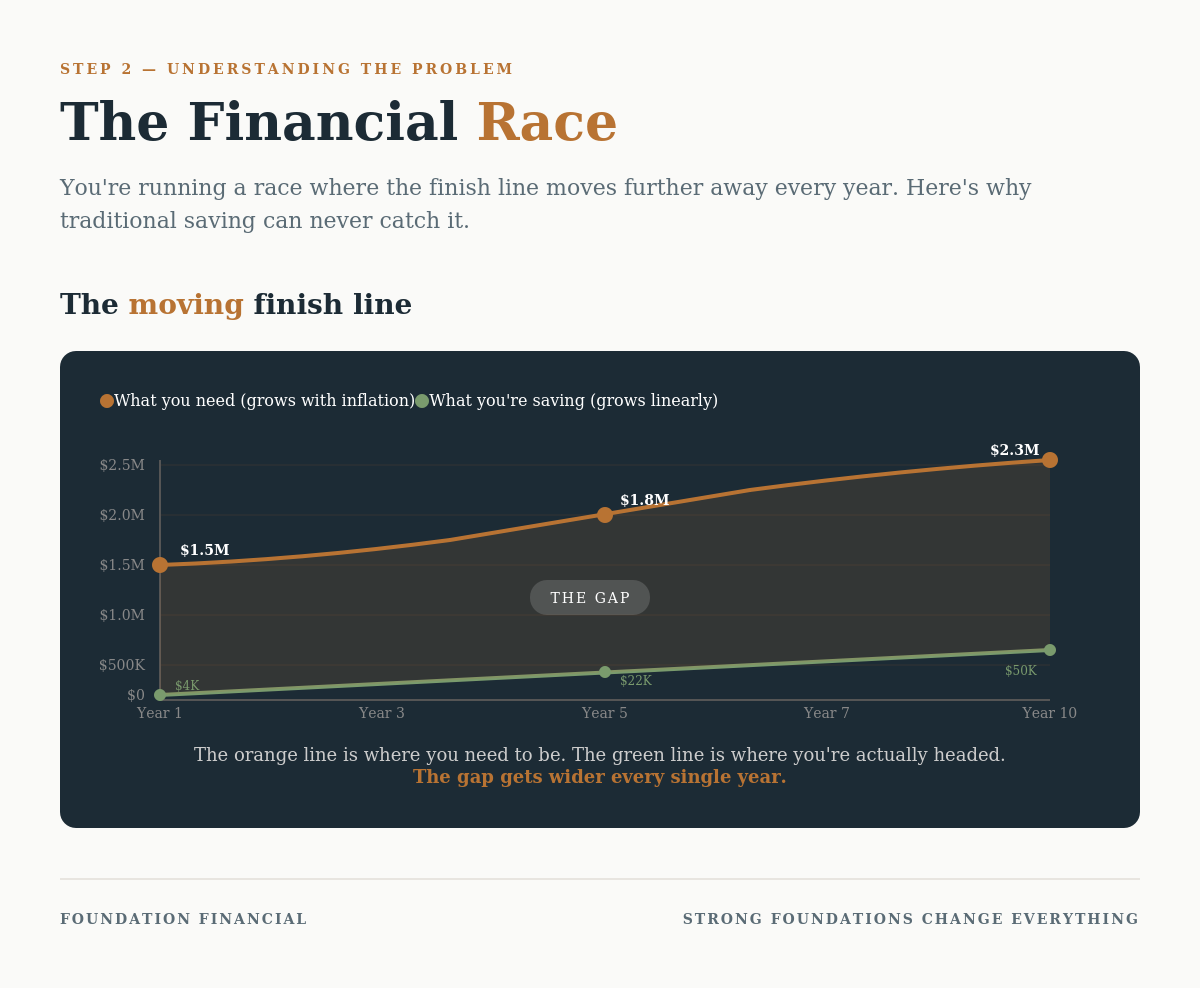
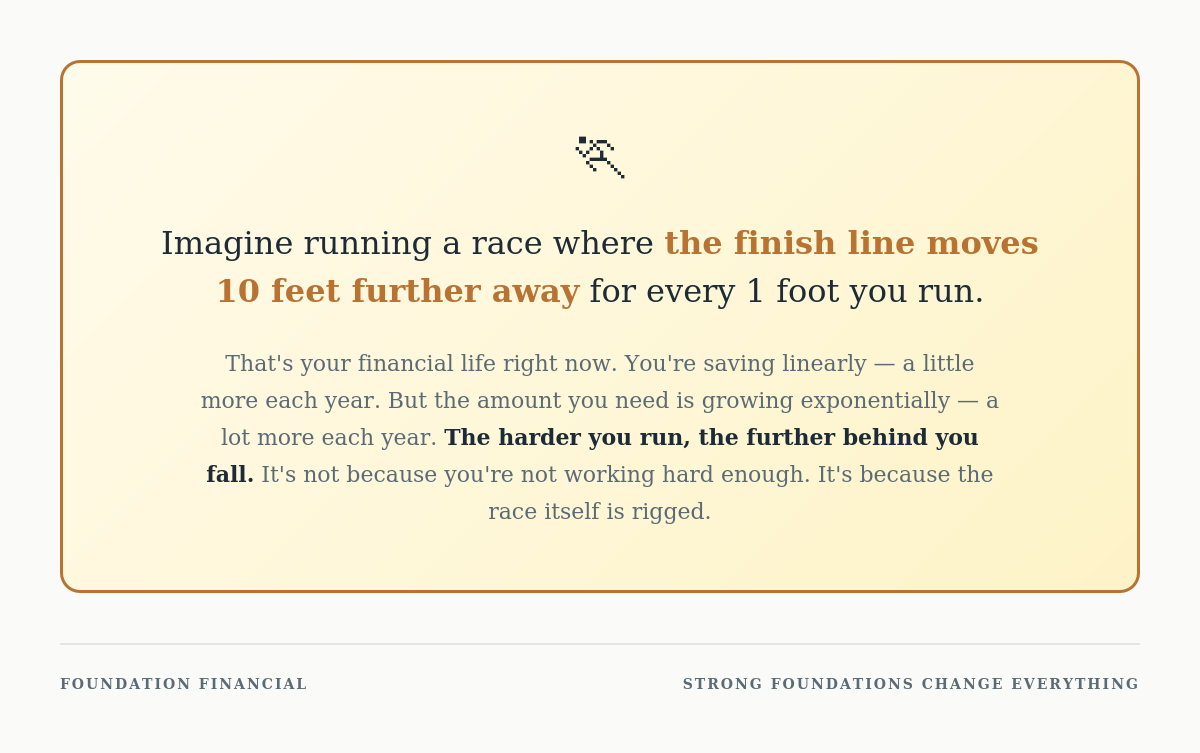
You're running a race. But the finish line keeps moving.
Every year, the amount of money you need to live comfortably — to cover your bills, support your family, and eventually stop working — gets bigger. That's inflation doing what it does. The cost of everything goes up.
But the amount you're saving? That grows in a straight line. A little bit more each year. Maybe a few hundred extra if you get a raise.
The problem is simple math: the finish line is growing faster than you are.
The Numbers Tell the Story
Look at the chart above. The orange line is your goal — how much money you need to replace your income and live comfortably. The green line is your savings — what you're actually putting away.
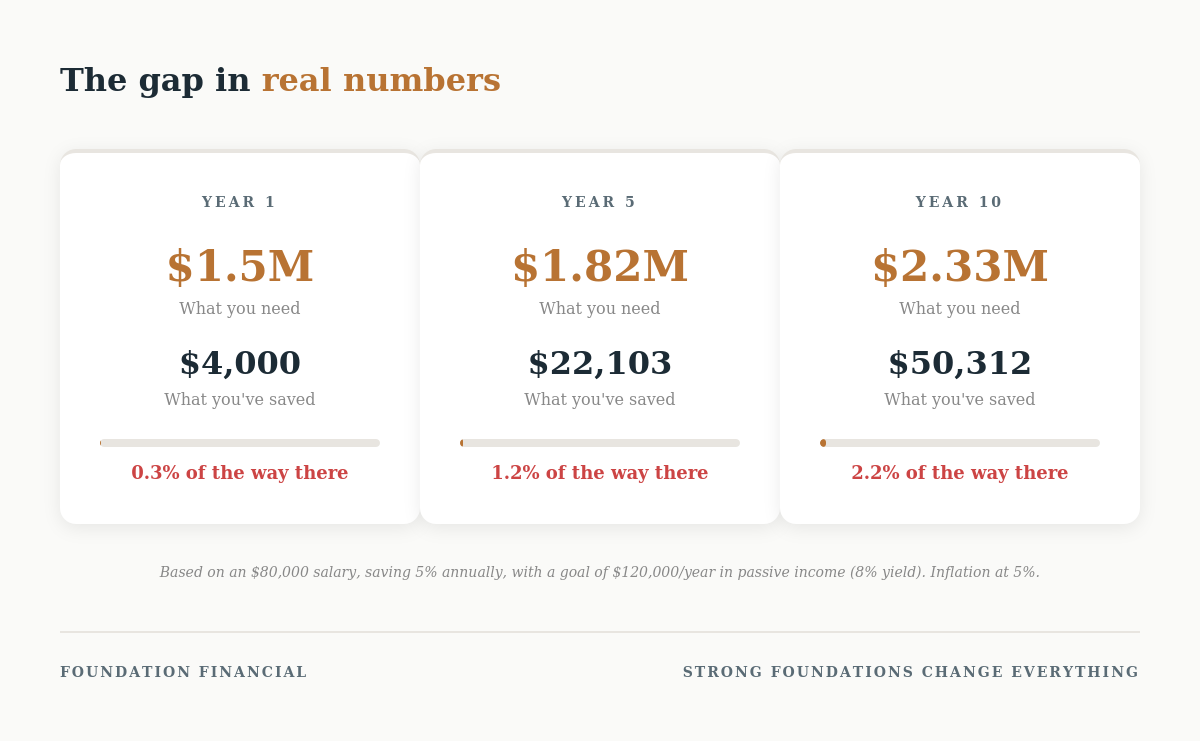
Watch what happens over time. The gap between those two lines doesn't shrink. It gets wider. Every single year. After a full decade of disciplined saving, the distance between you and your goal is larger than it was on day one.
That's not because you're doing anything wrong. It's because inflation is adding hundreds of thousands to your target while your savings are adding thousands. The goal is moving 16 times faster than your money is.
Why "Save More" Doesn't Work
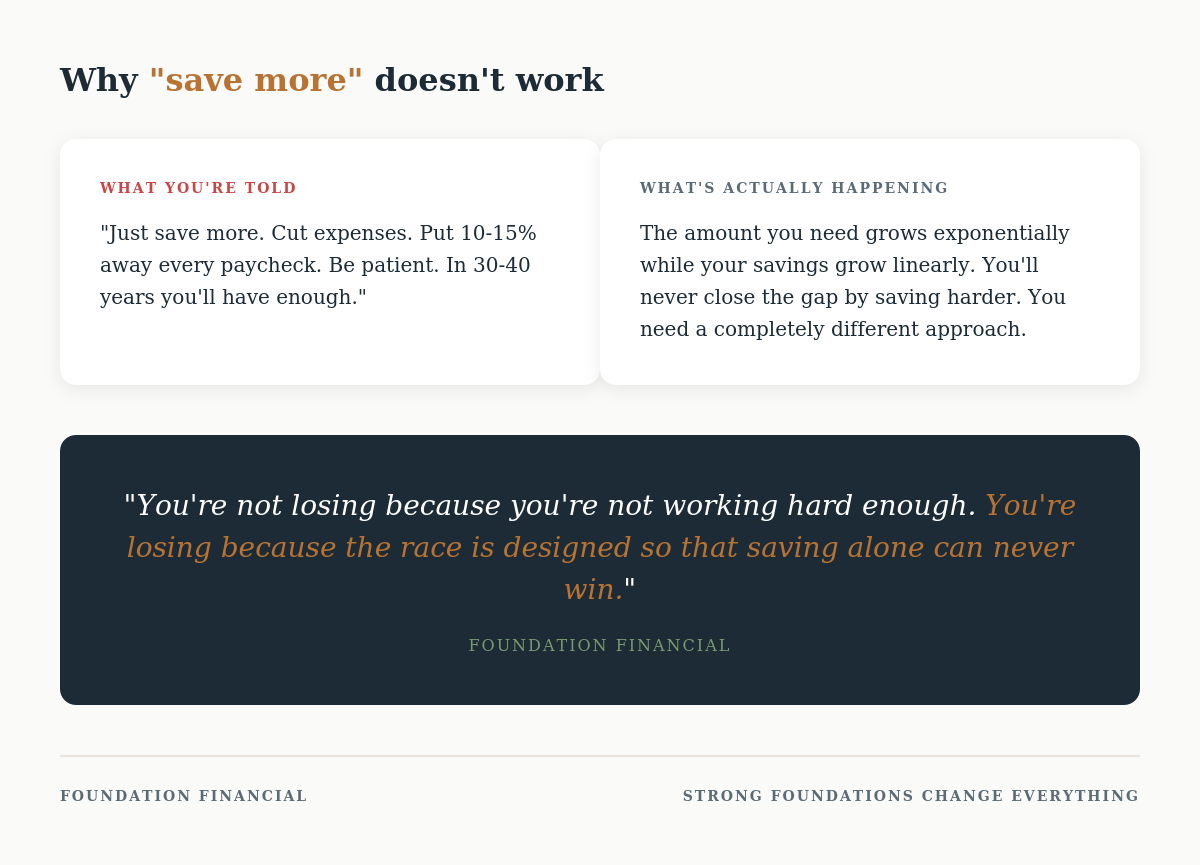
This is why the standard advice fails. "Just save more. Cut your expenses. Be patient."
You could double your savings rate and still not close the gap. The math doesn't work because you're growing linearly while the finish line grows exponentially. You'll never catch it by running faster on the same track.
It's not a discipline problem. It's a math problem.
What This Means For You
If saving alone can't win this race, then you need a different strategy. Not a better savings account. Not a slightly higher return. A fundamentally different approach to how your money works.
That's exactly what we cover in the next step.
You've now seen all three pieces of the problem: your dollar buys less every year, inflation is eroding your purchasing power by design, and the amount you need is growing faster than you can save. The gap isn't shrinking — it's widening every single year.
Now it's time to see the solution.
Key Takeaway
The finish line (what you need) grows exponentially while your savings grow linearly. After a decade of disciplined saving, the gap is bigger, not smaller. It's not a discipline problem — it's a math problem. You need a fundamentally different strategy, and that's what the Blueprint provides.
You See the Problem
Your dollar is shrinking. Inflation is stealing your purchasing power. The finish line is moving faster than you can save. The traditional path doesn't work.
Next: See how the Blueprint solves this with the EARN System — a fundamentally different approach to building wealth.
Next: Big Picture Solution →